
Google Ads
Google Ads for hotels: brand vs non-brand campaigns
Brand and non-brand campaigns play different roles in hotel marketing. Here is how to separate them, track them and interpret the results.
·4 min read
Meta plays a different role than Google Search. We structure campaigns so that management can see how inspiration, remarketing and promotion of offers contribute to bookings with a clear distinction between measured and assisted contribution.
Ongoing monthly management
Nikton Hospitality is a hotel marketing agency based in Zagreb. We work remotely with independent 4- and 5-star hotels, including hotels in Austria and Germany.
Onboarding means access to Google Ads, Meta, GA4 and the booking engine, an agreed goal, a monthly report and one monthly conversation.
For hotels in Austria and Germany, reports, emails and documents are in German. Calls and meetings are in English.
We work with the booking engine the hotel already uses. Before we start, we check how the engine sends data to GA4 and what needs to be fixed.
A visit to the hotel in Austria or Germany is possible by agreement.
Monthly management from €1,200 + VAT. The starting scope covers one hotel and one agreed advertising channel - Google Ads or Meta Ads. It includes campaign optimisation, performance monitoring through the existing measurement system, a monthly report and one monthly conversation.
Meta Ads campaigns present the hotel's offer on Facebook and Instagram and can reach interested guests again. Nikton Hospitality connects the campaign goal, audience, creative assets and landing page with measurable enquiries or bookings. Production and additional channels are scoped separately.
Monthly management from €1,200 + VAT. The starting scope covers one hotel and one agreed advertising channel - Google Ads or Meta Ads. It includes campaign optimisation, performance monitoring through the existing measurement system, a monthly report and one monthly conversation. Advertising budget, initial setup, additional channels and production are not included in the starting monthly fee.

AI illustration
Hotels often expect Meta campaigns to generate direct bookings immediately under a last-click model. In practice, Meta often builds inspiration, reminds guests who have already shown interest and promotes offers, requiring a different approach to measurement and interpretation. Without a clear campaign structure, a connection to the booking journey and attribution context, it is difficult to direct budgets towards the dates and markets where the hotel actually needs demand.
When Meta is evaluated only by the last click before booking, management loses some of the picture of what the channel really does for the hotel:
The monthly review answers business questions, not just engagement metrics:
The result is one conclusion connecting Meta campaigns with the hotel's business context.
Meta KPIs must be read with the context of attribution and the channel's role in the booking journey:
Step 1
Defining what Meta should achieve alongside Google and organic channels: inspiration, remarketing, promoting offers or supporting quieter dates.
Step 2
Separation of campaigns by business units, markets, funnel stages and seasonal priorities of the hotel.
Step 3
Checking the pixel, GA4, booking engine events and the ability to track bookings and revenue reliably.
Step 4
Optimising campaigns, creative assets and audiences, providing management reporting and defining priorities for the following period.
Meta reaches guests at an earlier stage of the decision when they are just exploring a destination, experience or type of accommodation and reactivates them through remarketing when they have already visited the web or started booking. We link the campaigns to the hotel’s website, booking engine and booking data to make it clear which audience, offer and market contribute to the bookings. Meta often assists the way to booking more than the last click, so we clearly separate the directly measured results from the assisted contribution and do not judge the channel by the last-click model alone.
Not necessarily. Meta often contributes to earlier decision stages and remarketing. That is why the entire booking journey matters alongside the final click before booking.
Google captures active demand at the moment of the search, while Meta more often builds inspiration and re-contact. There are different roles, time windows and attribution models so we do not compare them according to the same criteria.
Yes, if the pixel, GA4 and the booking engine are properly connected. Nevertheless, consent, multiple devices and a longer booking window limit attribution, so we separate directly measured from the assisted contribution.
It depends on markets, seasonality, competition, creative quality and campaign goals. Meta usually needs enough budget to test audiences and creative assets and reach priority markets consistently.
We align creative assets with the hotel's offer and provide guidance. Professional production of all materials is not included in monthly management unless specifically agreed.
No. Google and Meta play different roles in the hotel booking journey. The best results usually come when both channels are structured, measured and aligned with the hotel's business priorities.
No. Results depend on the offer, seasonality, creative assets, website, booking experience and market demand. We guarantee a professional process, transparent management and decisions focused on bookings and revenue.
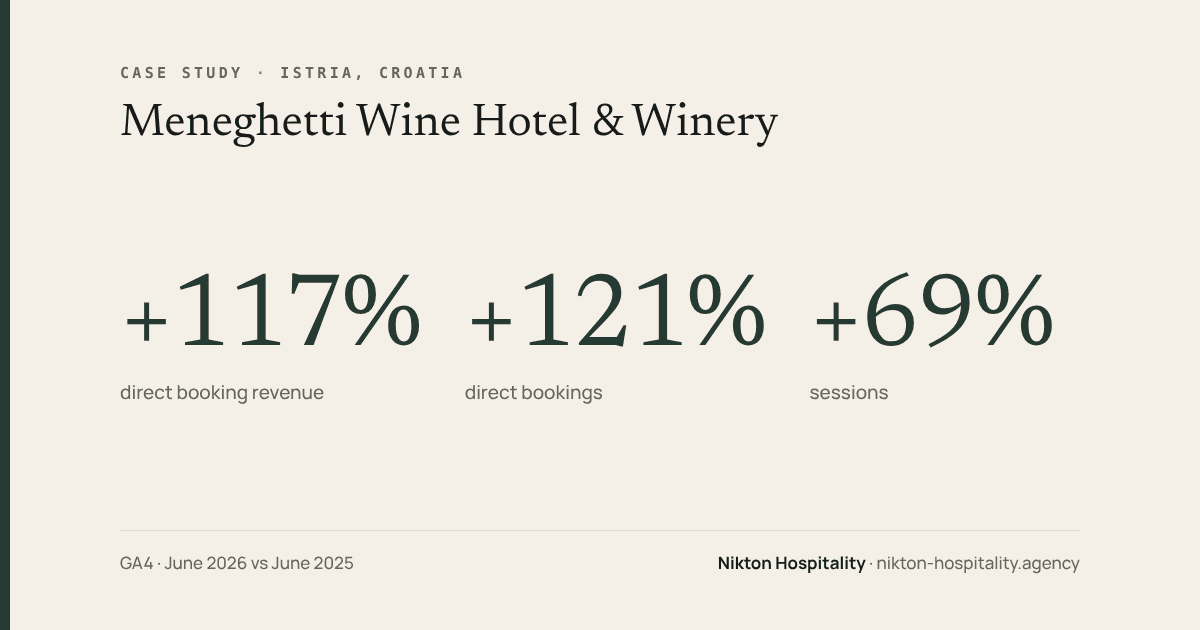
At Meneghetti, Meta was used for inspiration and remarketing, with a clear distinction between direct and assisted contributions to bookings.
Google Ads
Brand and non-brand campaigns play different roles in hotel marketing. Here is how to separate them, track them and interpret the results.
Direct bookings
Before the next ad, check six things: your own rate on Google Hotels, parity, a reason to book direct, engine measurement, German language and brand searches. These are the points where Croatian hotels most often lose the guest.
We will review campaigns, the hotel website, tracking and the booking journey, identifying the most important issues and opportunities for growth.
No generic sales presentation. The first conversation is based on your hotel's actual website, booking journey and digital setup.