Nikton Hospitality is a hotel marketing agency based in Zagreb. We work remotely with independent 4- and 5-star hotels, including hotels in Austria and Germany.
Onboarding means access to Google Ads, Meta, GA4 and the booking engine, an agreed goal, a monthly report and one monthly conversation.
For hotels in Austria and Germany, reports, emails and documents are in German. Calls and meetings are in English.
We work with the booking engine the hotel already uses. Before we start, we check how the engine sends data to GA4 and what needs to be fixed.
A visit to the hotel in Austria or Germany is possible by agreement.
Monthly management from €1,200 + VAT. The starting scope covers one hotel and one agreed advertising channel - Google Ads or Meta Ads. It includes campaign optimisation, performance monitoring through the existing measurement system, a monthly report and one monthly conversation.
SEO improves the accessibility and relevance of hotel pages for search. AEO focuses on clear answers to guest questions, while GEO concerns visibility in generative answers. They share a foundation of indexing, accurate information, useful content and a path to booking. Rankings and AI citations cannot be guaranteed.
The scope and fee for this service are agreed separately based on your hotel's goals, the current system and the access required.
AI illustration
The hotel can have organic traffic without this traffic having a clear business role
Hotel content is often created without a common plan. Articles about the destination, occasional offers and general texts about the hotel are published, but it is not clear:
-which demand a particular page should attract
-which market and decision stage it is intended for
-how it leads to a room, offer or booking engine
-whether it supports seasonal and sales priorities
-whether it needs to exist as a separate page
-how its business contribution will be measured
Meanwhile, pages with the greatest sales potential often lack useful content.
These can be:
-individual types of rooms and apartments
-seasonal packages
-wellness and spa offers
-restaurants and gastronomic experiences
-weddings and events
-destination experiences
-landing pages for a specific market or reason for the stay
Why organic traffic often doesn’t bring bookings
The result is a website with plenty of content but no clear connection between search, the hotel's offer and booking. More visits are not enough if users arrive with the wrong intent or have no clear next step. Organic traffic may grow through informational topics attracting a broad audience, but an article about destination attractions can contribute little commercially if:
-not related to the relevant hotel offer
-the user does not see the appropriate accommodation
-there is no clear CTA to check availability
-the content is not intended for the markets the hotel wants to attract
-the topic is unrelated to the period that needs occupancy
-the path to the booking engine is not measurable
Another problem arises when relevant demand exists but the hotel has no suitable page. In that situation:
-Google doesn't have a clear enough page to rank
-campaigns lead to an overly generic homepage
-rooms and packages compete with each other for the same queries
-destination content does not lead to the hotel offer
-organic users go to OTA sites to compare price and availability
-multilingual versions have inconsistent URLs, content, or canonical tags
The business issue extends beyond lower Google rankings. Relevant demand is being missed that could have reached the hotel's official website.
Which pages make commercial sense for your hotel
Not every hotel needs the same number of pages or the same content model. The structure depends on the type of hotel, the destination, the source markets, the accommodation, the amenities, the seasonality, the business priorities and the possibilities of the booking engine.
Accommodation units
for whom the room, apartment or villa is intended
how it differs and what information influences the decision
which search queries it can address and how it leads to availability
whether it needs its own indexable page
Offers and packages
wellness weekends, romantic packages and gourmet experiences
family stays, early booking offers and last-minute dates
holiday offers, longer stays and packages for individual markets
connecting the reason for the stay, package contents, terms and booking
Destination and surroundings
gastronomy, beaches, nature, cultural attractions and active holidays
family experiences, events and seasonal reasons to visit
a connection to the hotel's offer, beyond a standalone tourist guide
Restaurant, spa and additional facilities
whether there is a distinct commercial audience and landing page
whether it leads to a booking, inquiry or call
whether it can support a hotel stay and how performance is measured
Campaign and seasonal landing pages
support for Google Ads, Meta, organic traffic and email
a clear long-term role for the page, without indexing every short-lived campaign
Blog and informative content
relevant hotel demand and destination topics related to the stay
seasonal priorities and internal links to offers and rooms
questions guests ask before booking
content with a defined purpose, rather than publishing to meet a frequency target
What is included
1. Demand and search intent analysis
brand and non-brand queries, destinations and accommodation categories
hotel facilities, seasonal themes and travel motives
differences between languages and markets
Google Search Console, Google Ads search queries and competitors
2. Keyword and intent mapping
which queries belong to which page
preventing cannibalisation and disconnected landing pages
alignment of SEO and Google Ads landing logic
the topic, intent and role of each page in the booking journey
3. Content architecture
accommodation, offers, restaurant, spa, events, destination and experiences
campaign landing pages, blog categories and FAQ
multilingual versions and internal links towards booking
4. Priority landing pages
target intent, business goal and content structure
key messages, CTA hierarchy and connection to the booking engine
metadata, schema and elements for campaigns and measurement
5. Blog and informational content strategy
topics by role in the funnel, market and season
link to offers and sales pages
measuring success, rather than publishing to meet a frequency target
6. Internal linking
linking destination articles to offers and experiences to accommodation
linking rooms to packages and the blog to the Book Now journey
linking seasonal offers to accommodation units
7. Technical SEO recommendations
crawl, indexing, URL structure, canonicals and redirects
sitemap, robots, metadata, schema and thin content
Core Web Vitals, hreflang and SEO migration at redesign
8. Content briefs
the page's goal, audience and primary search intent
structure, key information, CTA and internal links
metadata direction and how results will be measured
9. Search Console analysis and measurement
queries, pages, CTR and indexing problems
performance by market and device
connecting GA4 and booking analytics to measure bookings
10. Coordination with writers and web agency
strategy, priorities, briefs and recommendations from Nikton Hospitality
the hotel, writers, translators or website agency handle production
reviewing materials and aligning content, technical requirements and booking logic
What your hotel receives at the end of the project
A prioritised content architecture
which pages should exist, be merged, expanded or removed
which topics have commercial priority and what to do first
A keyword and intent map
a definition of which demand each page addresses and where it guides the user
Briefs for priority pages
concrete instructions for creating content without speculating on the structure and CTAs
Technical SEO plan
recommendations for indexing, multilingual structure, canonicals, redirects and URLs
An internal linking plan
connecting content to commercially important pages and the booking journey
A measurable foundation
KPIs and monitoring of organic visibility, web behaviour and bookings
KPIs we track
We assess SEO beyond rankings and total organic traffic. Rankings are treated as a signal rather than a standalone business outcome.
Organic visibility
impressions, organic clicks, CTR and rankings for priority queries
visibility by market and language
brand and non-brand queries
priority sales page performance
Quality of organic traffic
organic traffic by page type
engagement on room and offer pages
Book Now clicks from organic traffic
enquiries, telephone and email clicks
Bookings and revenue
entries in the booking engine and confirmed bookings from the organic channel
recorded revenue and average booking value
performance by market and landing page
distinguishing direct, attributed and assisted contributions
Landing page performance
organic entries, Book Now click rate and transitions to the booking engine
bookings and enquiries by device
seasonal changes and performance before and after improvements
Technical quality
number of indexed relevant pages
canonical, duplicate content and hreflang errors
crawl problems and Core Web Vitals
preserving organic visibility after migration
How we work together
01
Step 1
SEO audit and demand analysis
We review the existing website, Search Console, content, technical condition, markets, competitive context and business priorities of the hotel.
02
Step 2
Architecture and priorities
We define priority pages, keyword and intent mapping, internal links, and content to create or improve.
03
Step 3
Briefs and technical recommendations
We prepare content briefs and SEO requirements for the website agency, developers and other partners.
04
Step 4
Implementation and monitoring
Hotel, writers and web agency carry out the agreed activities. Nikton Hospitality coordinates, reviews the performance and monitors the result according to the agreed scope.
The SEO effect does not occur immediately after the site is published. Indexation, competition, domain authority, seasonality and changes in demand affect the speed of results.
Connection with direct bookings and campaigns
SEO connects with the rest of a hotel's digital system. Relevant organic visitors should reach a page that matches their intent, clearly explains the hotel's offer and leads towards availability with a measurable next step.
The same content architecture can enable:
-more relevant Google Ads landing pages
-clearer non-brand campaigns and better seasonal promotions
-better remarketing and greater continuity between ads, the website and booking engines
-less reliance on the homepage as the destination for every campaign
For example, a guest searching for a wellness weekend needs a page connecting the spa experience, accommodation, offer terms and availability, rather than a generic homepage.
Organic traffic by itself does not guarantee bookings. The result is influenced by price, availability, reputation, season, competition, content quality, web UX and booking engine. The role of SEO is to bring more relevant demand to the relevant page and allow it a clear path to the booking.
What is not included
-unlimited monthly article writing and writing all website copy
-translation and localisation into every language
-website development and implementation of all technical recommendations
-website redesign and professional photography and video production
-buying links and automated link-building schemes
-publishing generic content for volume
-Google Business Profile management within this scope
-guaranteeing particular Google rankings or booking numbers
Frequently asked questions
Do you write all the articles and website copy yourselves?
We primarily define strategy, priorities, architecture and content briefs. Writing can be undertaken by an internal hotel team, an existing writer, or a web agency. According to the agreed scope, we can include writing or coordinate specialized authors and translators. We do not recommend producing a large number of articles without a clear business and user role.
What is the difference between SEO strategy and content writing?
The SEO strategy determines which pages should exist, what demand they cover, how they connect, what content has priority, how the page leads to a booking and how the result is measured. Writing content is an operational implementation of these guidelines. Quality text without good architecture can remain poorly visible. A good SEO theme without quality text and hotel context will not convince the guest.
Do you work with our existing website agency?
Yes. Nikton Hospitality prepares recommendations, briefs and priorities, while the website agency or developers implement technical changes and publish content. We give your existing website partner clear hospitality, SEO and booking requirements.
Is SEO separate from Google Ads campaigns?
Not in business terms. SEO and Google Ads may address different parts of demand, but should use aligned landing pages, offers and measurement. Google Ads can test demand and messages faster. SEO can build longer-term visibility around commercially relevant topics.
Do you handle local SEO and Google Business Profile?
Local visibility matters for the hotel, restaurant, spa and other facilities. Google Business Profile, maps, reviews and digital profiles are covered by our Hotel Digital Profile Optimisation service. Where needed, we connect local SEO with the overall content strategy.
How do you approach a multilingual hotel website?
We do not automatically translate the same SEO strategy into all markets. Demand, terminology, and intent may vary by language and country. We evaluate priority markets, the need for localization, differences in queries, hreflang settings and whether the content is localized or just translated. Translation and language editing are defined as a separate scope.
How long does the SEO project take?
Initial audit, architecture and briefs depend on the size of the website, the number of languages, content and business units. After implementation, it takes time for Google to process the changes and the result can be reliably evaluated. The speed depends on the technical condition, competition, authority of the website, seasonality and the extent of the changes made.
Can you guarantee the first position or the first page of Google?
No. Nobody can credibly guarantee a specific organic ranking. Rankings depend on competition, website quality and authority, technical condition, content and changes to Google's systems. We can guarantee a structured process, clear priorities, better pages and transparent performance monitoring.
How do you measure the success of the hotel SEO?
We assess success through a combination of visibility for priority queries, organic traffic to commercially important pages, Book Now clicks, booking engine entries, enquiries and other conversions, confirmed bookings and revenue where they can be reliably attributed, and technical quality and indexing. Total organic traffic alone is not enough.
Does the hotel need SEO if it is already making bookings through OTA channels?
Yes, if it wants to strengthen its own digital visibility and direct channel. OTA platforms can bring important demand, but a hotel on its own web has more control over the presentation of the offer, customer relationship, direct benefits, content, data and booking experience. SEO does not replace OTA channels. It helps the hotel build a higher quality own demand channel.
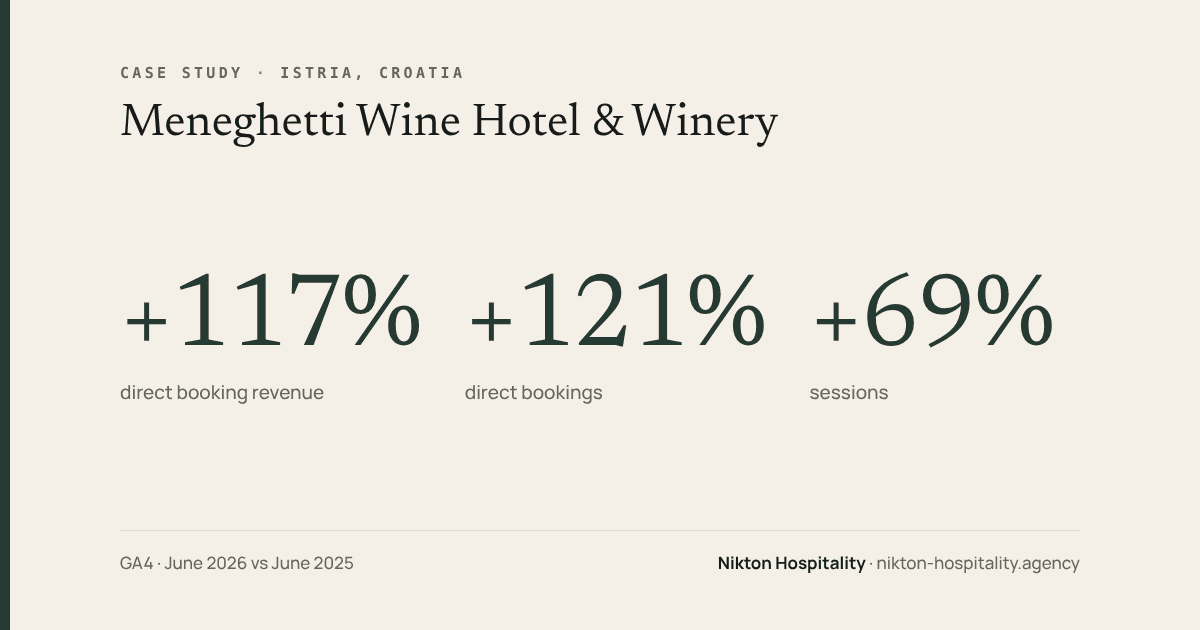
In the Meneghetti project, organic and direct traffic are part of a wider picture of the results, which also includes +69% growth in sessions. The comparison is June 2026 vs June 2025, source GA4.
Google, Booking.com, Tripadvisor and the hotel's own website often show different information about the same property. Here is what tends to be inconsistent and why it undermines trust.
Before the next ad, check six things: your own rate on Google Hotels, parity, a reason to book direct, engine measurement, German language and brand searches. These are the points where Croatian hotels most often lose the guest.
·3 min read
Does your organic traffic attract guests who can complete the booking?
We will review content structure, Search Console data, priority pages, technical SEO and the journey to the booking engine, then identify the greatest opportunities to attract more relevant organic demand.