GA4 tracking that gives the hotel more reliable booking and revenue information
We configure and validate GA4, GTM and cross-domain measurement so traffic sources are preserved through the booking engine and bookings are recorded reliably.
Nikton Hospitality is a hotel marketing agency based in Zagreb. We work remotely with independent 4- and 5-star hotels, including hotels in Austria and Germany.
Onboarding means access to Google Ads, Meta, GA4 and the booking engine, an agreed goal, a monthly report and one monthly conversation.
For hotels in Austria and Germany, reports, emails and documents are in German. Calls and meetings are in English.
We work with the booking engine the hotel already uses. Before we start, we check how the engine sends data to GA4 and what needs to be fixed.
A visit to the hotel in Austria or Germany is possible by agreement.
Monthly management from €1,200 + VAT. The starting scope covers one hotel and one agreed advertising channel - Google Ads or Meta Ads. It includes campaign optimisation, performance monitoring through the existing measurement system, a monthly report and one monthly conversation.
GA4 for a hotel should distinguish Book Now clicks, booking engine entries, booking steps and confirmed purchases with value and currency. Checks cover cross-domain transitions, duplicate transactions and attribution. A booking-button click alone does not prove a booking occurred.
The scope and fee for this service are agreed separately based on your hotel's goals, the current system and the access required.
AI illustration
A hotel can have GA4 installed and still not know where its bookings come from
The basic GA4 tag on the hotel website often measures visits and pages viewed. The problem arises when a guest clicks on Book Now and switches to a booking engine located on another domain. If this transition is not properly configured, the campaign source may disappear, the booking engine becomes a new referral source, the booking is attributed to direct traffic, and the purchase event contains no revenue or currency.
If the transition is not configured correctly, it can happen that:
-the source of the campaign disappears or the booking engine becomes a new referral source
-a booking is attributed to direct traffic
-Google Ads and GA4 show different results
-the purchase event lacks revenue, currency or a unique transaction ID
-the same booking is recorded more than once
-booking engine confirms a booking that GA4 does not record at all
-Meta or Google loses the connection to the user before the booking is completed
Management then gets more figures, but there is no reliable answer to the basic questions:
-How many direct bookings come from the website?
-Which channel brings users who are completing the booking?
-What is the revenue per market and device?
-How much does a booking from each campaign cost us?
-Is weak performance caused by the campaign, booking journey or inaccurate measurement?
-Can we trust the report we use to allocate budgets?
Why poor tracking affects budgets and decisions
Incorrect information is not just a technical problem. If a hotel can not reliably connect the channel with the booking, it can make the wrong business decision. For example:
-the campaign may seem unsuccessful because the source is lost in the booking engine
-direct traffic may appear stronger than it actually is
-booking engine can be displayed as a channel that "brings" bookings
-brand campaigns may appear to generate entirely new demand
-organic traffic may receive no attributed bookings
-duplicate purchase events may artificially inflate revenue
-wrong currency can distort ROAS and average booking value
-consent configuration can reduce the amount of data available without a clear explanation
The consequences are:
-budget increases or decreases based on unreliable figures
-markets are compared without equal measurement conditions
-campaigns are optimised towards the wrong conversions
-management loses confidence in reports
-booking problems remain hidden
-website, campaign and offer decisions are made without a reliable analytics foundation
The goal of GA4 tracking is not to achieve a perfect match of all platforms. The goal is to build a sufficiently reliable, documented and understandable system on which to make better decisions.
What hotel tracking needs to connect
We view hotel tracking as one user journey: traffic source → hotel website → Book Now → booking engine → room → checkout → booking → revenue.
1. Arrival on the hotel website
source, medium, campaign, landing page, market, language and device
brand or non-brand context, when it can be defined
2. Website interactions
Book Now clicks and views of rooms, offers and packages
telephone and email clicks, and restaurant, spa, wedding or event enquiries
3. Transition to a booking engine
domain linker, session and campaign data, referral exclusion
languages, currencies, multiple domains and behaviour under consent settings
4. Booking engine events
availability display, room list, room and package selection
start of checkout, data entry, additional services and completed booking
5. Booking and revenue
transaction ID, value, currency, room or package
check-in, check-out, number of nights and guests
an agreed definition of booking value for consistent reporting
6. Campaigns and conversions
Google Ads and Meta conversions, GA4 reports and booking engine data
each platform uses its own attribution logic - connected systems do not necessarily show identical numbers
What is included
1. Audit of existing tracking
GA4, GTM, booking engine, Google Ads, Meta, consent and purchase events
cross-domain configuration, referral sources, duplicate tags and existing documentation
a list of issues, their business impact and resolution priorities
2. GA4 and GTM architecture
property, data stream, container organization and naming convention
event naming, parameters, conversions and testing environments
hotel-owned accounts with appropriate partner access
3. Cross-domain tracking
domain linking, domain linker and unwanted referral configuration
verification of cookie behaviour and source/medium data after transition
event model adapted to the real booking process, not only GA4 documentation
5. Bookings, revenue and transaction value
unique transaction ID, value, currency and moment of activation
test bookings, changes and cancellations
GA4 connects a booking with its digital journey; the booking engine remains a separate source of record
6. Google Ads and Meta conversions
GA4 conversions and Enhanced Conversions where feasible
Meta Pixel and Conversions API coordination, deduplication and consent constraints
without promising an exact match between Meta, Google Ads and GA4 results
7. Consent and CMP check
Cookiebot or other CMP, Consent Mode and tag activation order
regional settings and documenting the expected loss of part of the data
8. Validation and testing
GTM Preview, GA4 DebugView, test Book Now clicks and a test booking
checking events, source/medium, currencies, transaction IDs and duplicate events
comparison with the booking engine on the desktop and mobile device
9. Documentation and handover
what has been configured and which events and parameters are tracked
cross-domain rules, limitations, access and basic checks
10. Recommendations for reporting
bookings, revenue, AOV, source/medium, campaigns, market and device
booking funnel, brand vs non-brand and deviations between GA4 and booking engine
monthly interpretation belongs to the booking engine analytics or management reporting
What your hotel receives at the end of the project
Documented hotel tracking system
an overview of accounts, tags, events, conversions, parameters and booking engine dependencies
A validated journey from website to booking
testing tracking from the traffic source through the Book Now click and booking engine to a completed booking
A more reliable purchase event and revenue data
checking the transaction ID, value, currency and timing of the purchase event
Traffic sources preserved through the booking engine
cross-domain configuration reduces incorrect attribution of bookings to the booking engine or direct traffic
Conversions ready for campaigns
clearly defined primary and secondary conversions, distinguishing micro-actions from confirmed bookings
Explained deviations and maintenance plan
comprehensible explanation of why the GA4, Google Ads, Meta and booking engine do not have to match completely
a definition of what to check periodically and when to repeat validation
KPIs and quality checks
GA4 tracking project is not judged by the amount of tags implemented, but by whether the hotel can get more credible answers. Booking engine remains the primary source of confirmation of the total number of bookings and revenues.
Bookings and revenue
purchase events, recorded revenue and average booking value
unique transaction IDs by market and device
Channels and attribution
source/medium and campaign for each booking
organic, paid, direct and referral distribution
Google Ads and Meta attributed conversions, brand vs non-brand
Booking journey
Book Now clicks, booking engine entries, room selections and checkout
ongoing funnel analysis is covered by booking engine analytics
Technical quality
loss of source/medium data and booking engine referral traffic
cross-domain continuity, duplicate events and bookings without a recorded value
Consent and data visibility
share of sessions with available analytical signals
the impact of consent choices and platform-modelled data
Comparison of systems
GA4 purchase events versus booking engine bookings and revenue
Google Ads and Meta compared with GA4 results
known reasons for differences - the goal is to understand them, rather than force identical numbers
How we work together
01
Step 1
Audit of the existing system
We review the hotel's website, booking engine, GA4, GTM, advertising platforms, consent system and existing reports.
02
Step 2
Specification and implementation
We define events, parameters, cross-domain rules, purchase data and conversions. We implement directly or coordinate web agency and booking engine providers.
03
Step 3
Validation of the entire booking journey
We test the journey from website arrival to a confirmed booking, including traffic source, events, revenue, currency and campaign conversions.
04
Step 4
Documentation and handover
The hotel receives documentation, a list of limitations, access, checking instructions and a recommended maintenance plan.
GA4 tracking is a project setup, not a one-time tag insertion. After changes to the website, booking engine, consent platform or campaign conversions, it is necessary to check whether the system continues to work according to the documented specification.
Difference between related services
GA4 tracking for hotels
Configuring, validating and documenting measurement.
Can we technically connect the website, booking engine, booking and revenue with sufficient reliability?
Booking engine analytics
Ongoing analysis of the booking funnel, abandonment, devices, markets and traffic quality.
Where do users abandon the journey, and what needs improving?
Management reporting for hotels
Monthly linking of investments, campaigns, bookings, revenues, markets and business priorities.
What happened, what does it mean and what should be done next month?
Google Ads for hotels
Campaign management based on validated conversions and business priorities.
How to focus your budget on markets and campaigns that deliver better demand?
Hotel website and booking UX
Defining user journey, CTA hierarchy, booking transitions and tracking requirements before and during web development.
How should the website guide guests towards availability and booking?
Connection with direct bookings, campaigns and reporting
Without quality tracking, the hotel can see the total number of bookings in the booking engine, but not how the users got there. GA4 does not create bookings it provides a better basis for deciding where to invest, what to optimize and what results to trust.
GA4 tracking helps connect questions such as:
-whether the user is coming from the Google Ads campaign, organic search or direct traffic
-whether they clicked Book Now and continued to the booking engine
-whether they completed a booking and what its value was
-whether they used mobile or desktop and which market they came from
-whether the campaign had a direct or assisted contribution
For campaigns and reporting, this means a better basis for:
-optimising towards bookings as well as clicks
-comparison of brand and non-brand results and estimation of cost per booking
-distinguishing confirmed booking engine bookings from platform attribution
-checking for duplicate or incorrect conversions
We clearly separate confirmed booking from booking engine, booking in GA4, conversion of Google Ads and Meta attribution and the part of the customer journey that cannot be fully tracked.
What is not included
-ongoing monthly Google or Meta campaign management
-monthly booking funnel analysis and management reporting
-daily monitoring of every analytics discrepancy
-development or redesign of the hotel website and booking engine
-changes that the provider does not technically support
-booking engine licenses, custom data warehouse and BI development
-BigQuery analytics without a separate scope
-unlimited administration of GA4 and GTM accounts
-retroactive recovery of data not previously measured
-guarantee of complete monitoring of each user or identical figures in all systems
-legal advice on privacy and cookies
Frequently asked questions
Why are the numbers in GA4 different from the booking engine?
The booking engine records bookings made in its own system. GA4 records only bookings for which the analytics event was correctly sent and permitted. Differences can arise from consent, ad blockers, cross-domain issues, duplicate purchase events, test bookings and different revenue definitions. We use the booking engine to confirm total bookings and revenue, and GA4 to understand their source and digital user journey.
Does a hotel need Google Tag Manager, or can GA4 be installed directly?
GA4 can technically be installed without GTM. For a hotel system with multiple events, a booking engine, campaign conversions, consent and multiple domains, Google Tag Manager usually offers better control and maintainability. The final recommendation depends on the existing technical architecture.
What is cross-domain tracking?
Cross-domain tracking connects the user journey between two or more domains. In the hotel industry, this is important because the official web and booking engines are often separate systems. Without proper configuration GA4 can interpret the transition to the booking engine as a new session or a new traffic source, so the booking can be wrongly attributed to the booking engine, referral or direct traffic.
Can you link Google Ads and Meta campaigns to bookings?
We can configure and validate conversion events that platforms use for optimisation and reporting. Google Ads, Meta and GA4 use different attribution models, conversion windows and consent rules, so we interpret results alongside confirmed booking engine data.
How does Cookiebot or other consent system affect numbers?
If the user does not allow analytical or marketing cookies, part of the data will not be collected in the same way. Consent Mode can give platforms modeling signals, but the modeled data is not the same as the directly measured user journey. The goal is not to bypass the consent, but to ensure that the implementation respects the user's choice and that the management understands the limitations of the data.
How long does the GA4 tracking project take?
The duration depends on the number of domains, the booking engine, the quality of the existing setup, the number of events, the involvement of the web agency and the provider and the availability of the test booking. A simpler validation can be relatively short. Full implementation with new events and cross-domain tracking takes longer. Scope and deadline are defined after the audit.
Who maintains the tracking after implementation?
The hotel should clearly assign responsibility to a person or partner. Nikton Hospitality hands over documentation and can periodically check data quality as part of a wider engagement. We recommend revalidation after a website redesign or changes to the booking engine, CMP, checkout process or key campaign conversions.
Can you work with our web agency and booking engine provider?
Yes. Nikton Hospitality defines analytical requirements, events, parameters and validation criteria. Web agencies and booking providers make technical changes within the systems they manage. The goal is that the hotel does not have to coordinate different technical responses on its own without a common specification.
What is the difference between GA4 tracking and booking engine analytics?
GA4 tracking is a setup project that configures and validates measurement of events, bookings, revenue, cross-domain journeys and conversions. Booking engine analytics is an ongoing service using this data to examine where users abandon the journey, how the funnel changes and what needs improving. Tracking provides the data. Analytics turns it into monthly conclusions and recommendations.
Can you guarantee exact figures?
Not in the sense of a complete match across every platform and tracking every user. Consent, ad blockers, multiple devices and technical limitations affect data availability. We can provide a well-designed implementation, validated events, documented limitations, booking and revenue tests, and a process for periodic quality checks.
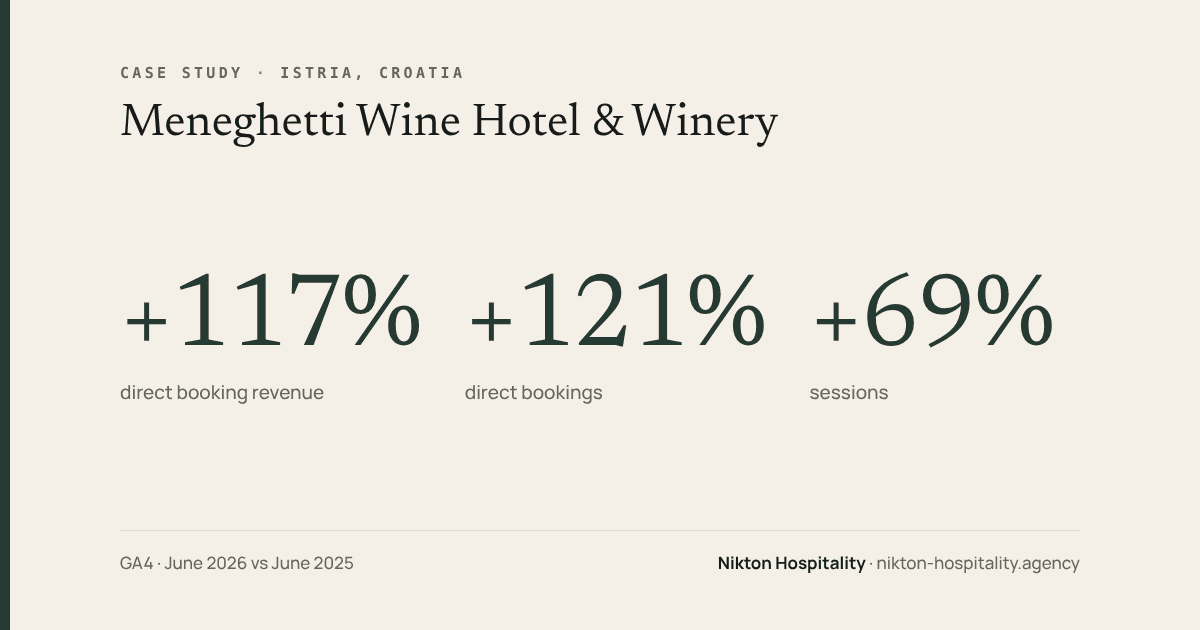
For Meneghetti, cross-domain tracking and ecommerce events were set up so that the source of traffic would not disappear when switching to the booking engine.
Four events on the booking engine and the guest's source. From them a manager sees where guests drop off: at the rate, at the details or at payment. 64% of booking pages in our check have no tag at all.
·3 min read
Can you reliably tell how many bookings come from the website and campaigns?
We will review GA4, GTM, booking engine, cross-domain configuration, purchase events, consent and campaign conversions and highlight where data is lost or misattributed.