
Seasonality and markets
Seasonality in Adriatic hotels: media and occupancy
Adriatic hotels rely on a short season. A media plan that ignores this spends budget without control. Here is how to align campaigns with the demand curve.
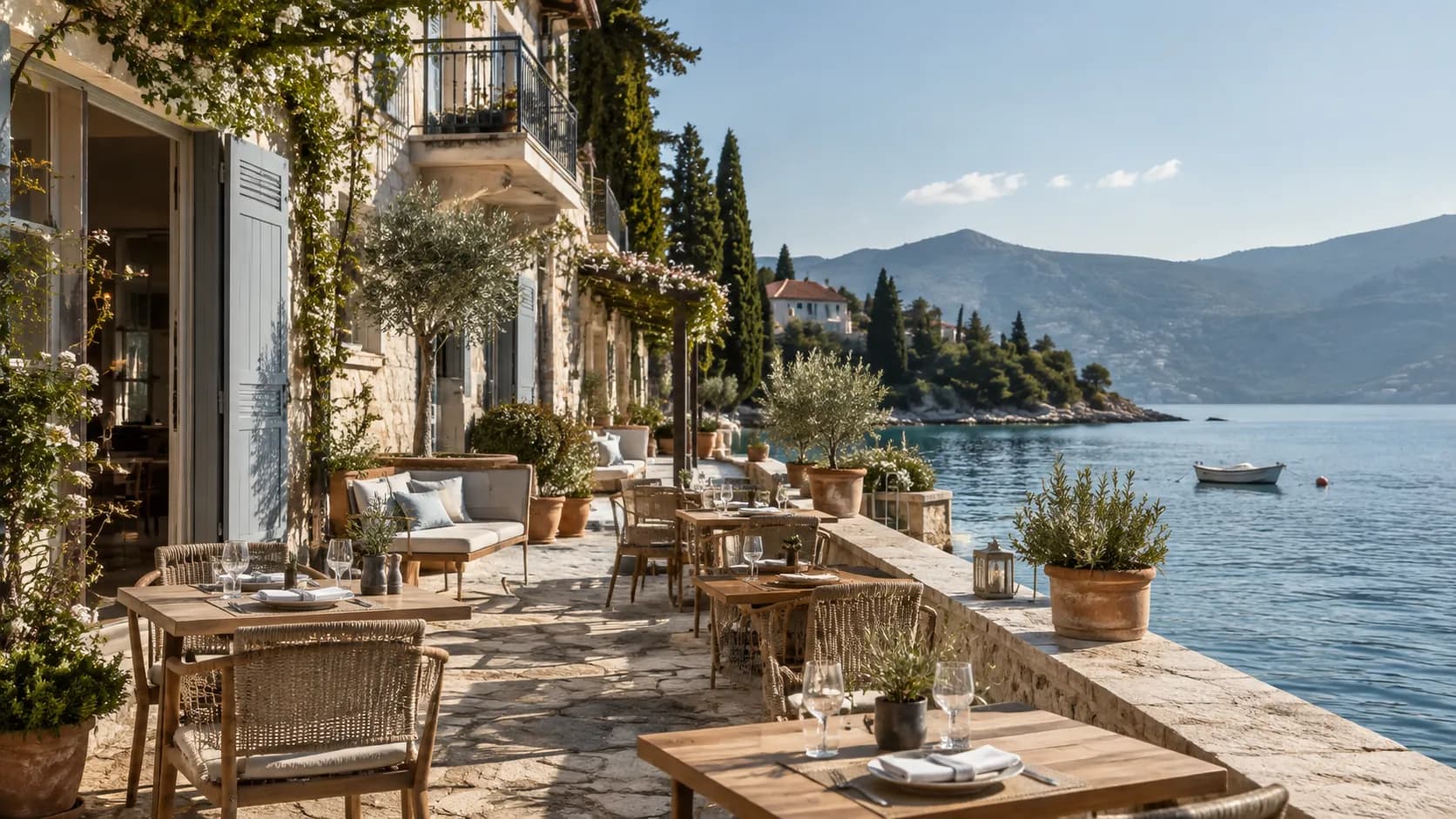
AI illustration
Characteristics of the Adriatic season
The Adriatic coast has a pronounced concentration of demand: much of the annual revenue comes from July and August, with growth from May and declines from September. This form affects everything: CPC on Google, CPM on Meta, staff availability and guest perception.
A hotel that plans the media as if demand is even through the year is spending its budget at the wrong time. Revenue and marketing team must share the same calendar.
Season Stages and Media Priorities
| Phase | Period (indicative) | Media focus |
|---|---|---|
| Preseason | March-May | Early bookers, DACH, brand protection |
| High season | June-August | Non-brand, Meta prospecting, remarketing |
| Postseason | September-October | Extended stays, wellness, domestic market |
| Out of season | November-February | Packages, events, guest database and loyalty |
Each stage has a different acceptable cost per booking. A comparison of June and November without context leads to wrong decisions to shut down campaigns.
Markets and Different Decision Patterns
Adriatic hotels most often depend on the combination of markets:
- DACH - early planning, longer stay, price sensitivity compared to the competition
- Italy - short transfer, weekend and extended stays, strong seasonality
- Domestic guests - later decisions, often short stays, growth in the post-season
- Scandinavia and UK - charter and package logic, specific booking window
One creative set in English does not cover everything. Advertising in new markets requires a test before scaling; the same applies to segments within existing markets.
Occupancy vs advertising pressure
High occupancy in July does not mean that all campaigns should be stopped. Two scenarios:
The hotel is full on key dates. Brand campaigns and remarketing protect the direct channel from OTA redirects. You can reduce or target a non-brand for weaker weeks.
The hotel has holes in the calendar in the middle of the season. The problem is often price, minimum stay or availability on OTAs, rather than insufficient advertising. Before increasing your budget check price and message matching.
Coordination with Revenue Team
Marketing without revenue context creates conflicts:
- campaign promises a discount, revenue keeps a high rate
- ad targets families, and the hotel has no family room category available
- Meta promotes spa, and wellness center is being renovated
Monthly management report should show occupancy per week alongside media costs, not just aggregated numbers for the month.
Summer season: Google and Meta together
In peak season, both channels work in parallel, but with a different role. Google captures active planning; Meta inspires and brings back guests who have explored options. Without coordination, attribution becomes chaotic.
A more detailed framework for coordinating Google and Meta campaigns includes reporting rules and avoiding double counting conversions.
Plan for the weaker periods
Seasonality is not a summer-only problem. Marketing plan for the weaker months should be part of the annual document with packages, a targeted budget and real KPIs.
Conclusion
The seasonality of Adriatic hotels is not an obstacle: it is a planning parameter. Media that follow the demand curve, markets and revenue strategies deliver more predictable results than an evenly distributed budget throughout the year.
To analyze your hotel's seasonal profile, request a hotel audit.
Related: case study Meneghetti Wine Hotel & Winery. Campaigns, the booking engine and direct booking results, June 2026 vs June 2025, source GA4.
Frequently asked questions
When to start increasing the budget for the summer season?
For DACH markets usually 8-12 weeks before the desired arrival date, depending on the segment. Boutique and luxury hotels often have an earlier booking window than family resorts. Follow the query trend in PMS, not just a calendar.
Is seasonality an excuse for bad campaign results?
Partially. Seasonality explains the lower volume, but does not explain the bad booking funnel, the wrong messages, or the mismatched prices. Always separate the seasonal context from the operational problems.
Nikton Hospitality. A digital marketing agency for hotels.
About Nikton Hospitality and how we workRelated articles
Seasonality and markets
Summer season: coordination of Google and Meta campaigns
In peak season, Google and Meta compete for the same guest and for the same budget. How to coordinate channels, attribution and messages without double counting.
Seasonality and markets
Prices and occupancy throughout the season: campaign messaging
When an ad promises one thing and the booking engine shows another, bookings and trust are lost. How to align prices, occupancy and messages throughout the season.