
Booking engine
Booking engine, channel manager and Phobs: who sends the rate
The booking engine is where the guest completes a reservation for the hotel. The channel manager sends rates and availability to OTAs. Phobs still needs its role confirmed.
Short answer
The booking engine is where the guest completes a reservation for the hotel, and the channel manager sends rates and availability to OTAs. Some vendors sell both, and for Phobs the hotel still has to confirm which role is in use.
- The booking engine is where the reservation is completed.
- The channel manager sends rate and availability to OTAs.
- A forgotten update leaves the OTA rate unchanged.

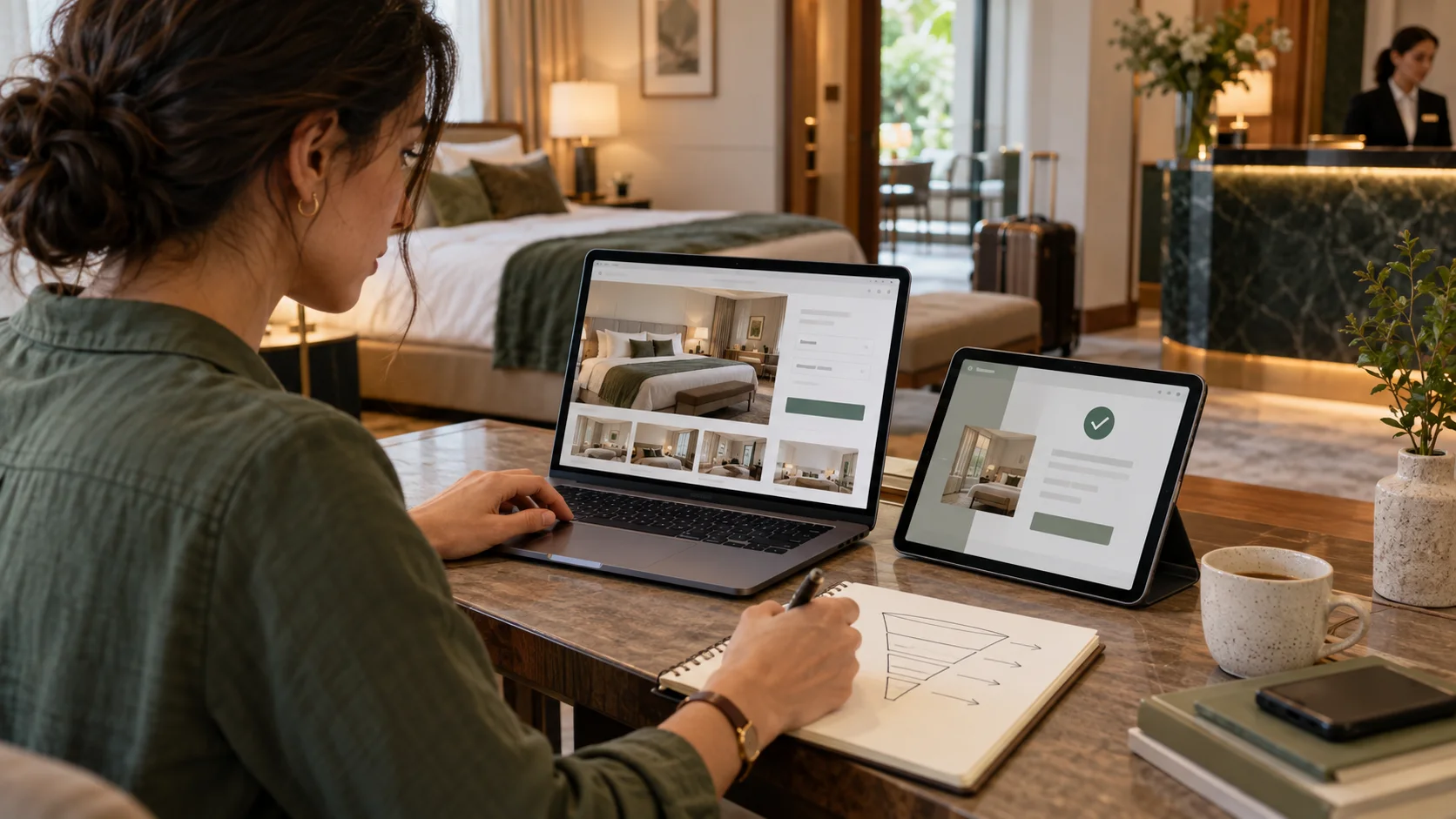
AI illustration
The booking engine is where the guest completes a reservation for the hotel, and the channel manager sends rates and availability to OTAs. Some vendors sell both, and for Phobs the hotel still has to confirm which role is in use.
Two jobs in the reservation
On the booking engine the guest chooses a room and completes the reservation. The channel manager does not have to be that screen. Its job is to send the rate and availability to OTA channels.
If the hotel changes the rate only on the website, the OTA does not see it until the channel manager sends it. A director needs to know which system just saved the rate, and which system is only displaying it. The same split shows up for independent hotels in Croatia and across the EU.
On the hotels I work with, Phobs is both: the booking engine and the channel manager.
When the channel manager does not send the new rate
The hotel sets the website rate to 180 EUR and does not send it through the channel manager. The OTA still shows 200 EUR.
The gap is 200 - 180 = 20 EUR. It lasts until the channel manager sends the new rate. After that send, the comparison starts again from the rate the manager actually sent.
Sources
Next step
Following that rate in analytics continues in the article on Phobs and GA4. The working frame is the hotel marketing guide, and the reservation check is the hotel audit together with the booking engine checklist.
Related: case study Meneghetti Wine Hotel & Winery. Campaigns, the booking engine and direct booking results, June 2026 vs June 2025, source GA4.
Frequently asked questions
What is a booking engine, and what is a channel manager?
The booking engine is where the guest completes a reservation for the hotel. The channel manager sends rates and availability to OTAs. Those are two jobs, even when one vendor sells both.
Is Phobs always both the engine and the channel manager?
On the hotels I work with, yes: Phobs is both the booking engine and the channel manager. With other setups, ask the vendor which system sends rates to OTAs.
Why can an OTA still show 200 EUR after the website is 180 EUR?
Example: the website rate was changed to 180 EUR and the channel manager did not send the new rate. The OTA still shows 200 EUR. The gap is 200 - 180 = 20 EUR until the manager sends the update.
Is that 20 EUR a legal claim?
No. It is an operations problem, a forgotten update. It is not a parity breach and not a legal question.
Nikton Hospitality. A digital marketing agency for hotels.
About Nikton Hospitality and how we workRelated articles

Analytics and tracking
Phobs and GA4: one booking, one purchase
Phobs runs on its own domain. Without cross-domain measurement GA4 loses the guest's source, and the purchase is easily counted twice. On 15 of 21 Phobs booking pages we found neither GA4 nor GTM.
Analytics and tracking
GA4 booking engine: what a hotel should track
Four events on the booking engine and the guest's source. From them a manager sees where guests drop off: at the rate, at the details or at payment. 64% of booking pages in our check have no tag at all.